Connect with us

Latest

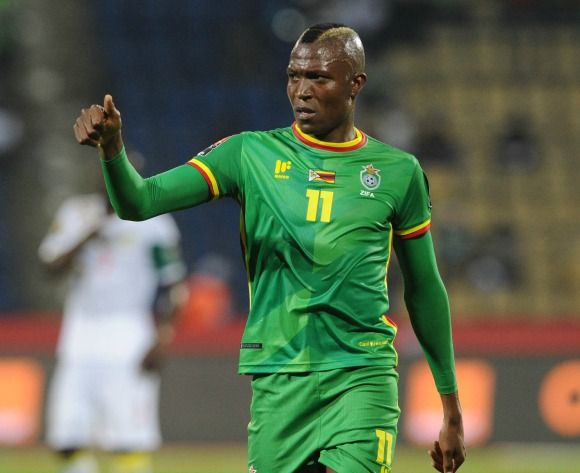
Former Warriors and Orlando Pirates striker Tendai Ndoro has died at the age of 40.

Published

on

Former Warriors & Orlando Pirates striker Tendai Ndoro has passed away at 40. He was found in his apartment in South Africa.

The news was confirmed by ex-Warriors player Cephas Chimedza, who shared Ndoro’s photo in national team colours on Facebook with the caption: “Fire R.I.P Chief Striker”.

Ndoro rose to prominence at Chicken Inn, where his impressive goal-scoring earned him a Warriors call-up and a move to Mpumalanga Black Aces in 2013. His form in South Africa later secured him a transfer to Orlando Pirates, before turning out for Al-Faisaly in Saudi Arabia, Ajax Cape Town, Highlands Park, and Al-Orouba in Oman.

In 2021, concerns about his health surfaced when troubling images of him circulated online, with reports suggesting he had even lost his eyesight.

Continue Reading
Click to comment

You must be logged in to post a comment Login

Leave a Reply

Latest

NetOne Leads Digital Growth and Rural Connectivity in POTRAZ Q4 2025 Report

Harare, Zimbabwe – NetOne closed 2025 on a strong note, with the Postal and Telecommunications Regulatory Authority of Zimbabwe (POTRAZ) confirming the operator’s leadership in digital growth and rural connectivity in its Fourth Quarter 2025 Sector Performance Report.

Published

on

NetOne Building

Harare, Zimbabwe – NetOne closed 2025 on a strong note, with the Postal and Telecommunications Regulatory Authority of Zimbabwe (POTRAZ) confirming the operator’s leadership in digital growth and rural connectivity in its Fourth Quarter 2025 Sector Performance Report.

The report shows NetOne recorded the strongest growth in mobile internet and data traffic among Zimbabwe’s major operators, with usage rising by 18.50% from 25.29 billion MB in Q3 to 29.97 billion MB in Q4. This translated into a 1.14 percentage point increase in market share, further strengthening NetOne’s competitiveness in the country’s data-driven telecommunications sector. The company also grew its active subscriber base from 4,062,894 to 4,101,492, reflecting sustained customer confidence.

Driving this momentum is NetOne’s deliberate infrastructure expansion strategy. During the quarter, the operator added 89 LTE base stations and increased its 5G sites from 21 to 26. POTRAZ noted that NetOne “continued to make strides particularly in 3G and LTE deployments, to expand its network coverage.” The report also revealed NetOne’s dominance in rural connectivity, commanding 46.14% of Zimbabwe’s rural base stations. This footprint is bridging the digital divide by connecting underserved communities to education, healthcare, financial services, and digital commerce.

Group Chief Executive Officer Engineer Raphael Mushanawani said the results affirm NetOne’s commitment to building an inclusive digital future. “These results affirm our commitment to connecting communities, empowering businesses and accelerating Zimbabwe’s digital transformation through resilient and accessible network infrastructure,” he said.

Beyond infrastructure, NetOne has intensified its corporate social responsibility initiatives, including drilling boreholes in drought-prone areas, supporting schools with digital learning tools, and partnering with healthcare institutions on community wellness programmes. The company’s inclusive culture is also reflected in its workforce, with women accounting for 436 of its 1,045 employees.

NetOne’s transformation into a modern digital services provider has earned national recognition, with Engineer Mushanawani recently inducted into the prestigious Business Leaders Hall of Fame 2026. As Zimbabwe moves toward a data-centric economy powered by broadband, 5G, and digital services, NetOne’s Q4 2025 performance demonstrates that the operator is not only adapting to change but helping lead it.

Continue Reading

Latest

Belarus Model Inspires Zimbabwe’s Push for High-Performance Sport Structures

Minsk, Minsk – The Minister of Sport, Recreation, Arts and Culture, Hon. Anselem Nhamo Sanyatwe, has called for urgent reforms in Zimbabwe’s sports delivery systems following a benchmarking visit to Belarus’ leading high-performance institutions in Minsk.

Published

on

Minsk, MinskThe Minister of Sport, Recreation, Arts and Culture, Hon. Anselem Nhamo Sanyatwe, has called for urgent reforms in Zimbabwe’s sports delivery systems following a benchmarking visit to Belarus’ leading high-performance institutions in Minsk.

During the tour, the Minister visited the Republican Center for Olympic Training in Tennis, the City Center for Olympic Training in Tennis, the International Standard Swimming Pool, and the State Institution Health Resort Yunost. The facilities showcased Belarus’ deliberate investment in structured athlete development, technical staffing, and modern competition frameworks.

Hon. Sanyatwe highlighted the importance of intentional infrastructure planning, noting how Belarus has built a globally competitive sporting nation despite its small population. “What we have seen here is a country that made a deliberate decision to institutionalise excellence in sport. Facilities are not operating in isolation. They are part of a national system linked to athlete development, competitions, science and administration,” he said.

Zimbabwe’s Minister of Sport, Recreation, Arts and Culture, Hon. Anselem Nhamo Sanyatwe, tours sports facilities in Minsk, Belarus.

The Minister emphasized the need to revive major national competitions such as the Zimbabwe Open Tennis Championship, describing them as the “heartbeat of high-performance sport.” He expressed hope that strengthened bilateral relations with Belarus could pave the way for technical exchanges and joint participation in future tournaments.

At the International Standard Swimming Pool, the delegation observed how structured programming, technical supervision, and consistent maintenance have kept the facility relevant for both elite athletes and the public. The Minister noted similarities with Zimbabwe’s Aquatic Complex, stressing that infrastructure alone is insufficient without proper management systems.

“We have facilities (Zimbabwe’s Aquatic Complex) back home with enormous potential. The issue is not always infrastructure deficit alone, but the structures around management, technical staffing, maintenance culture and programming. Facilities must operate within professional systems that guarantee sustainability and high performance outcomes,” said Hon. Sanyatwe.

The visit also underscored Belarus’ integration of athlete welfare, recovery, and scientific support services into its broader sports ecosystem. Hon. Sanyatwe said Zimbabwe must adopt similar approaches, combining infrastructure with professional systems to ensure sustainability and high-performance outcomes.

He concluded that Zimbabwe has the potential to become a regional sporting hub if it strategically rebuilds its competitive structures, modernises facility management, and leverages international cooperation.

Continue Reading

Latest

Minsk Mission: A New Playbook for Zimbabwean Sport

MINSK, BELARUS — Zimbabwe’s sporting future is being reimagined in the laboratories and training halls of Minsk, where science and sport converge with precision. The Minister of Sport, Recreation, Arts and Culture, Hon. Lt. General (Rtd) Ambassador Anselem Nhamo Sanyatwe, has embarked on a groundbreaking mission to align Zimbabwe’s athletic development with world-class scientific standards.

Published

on

Lt-Gen-Anslam-Sanyatwe

MINSK, BELARUS — Zimbabwe’s sporting future is being reimagined in the laboratories and training halls of Minsk, where science and sport converge with precision. The Minister of Sport, Recreation, Arts and Culture, Hon. Lt. General (Rtd) Ambassador Anselem Nhamo Sanyatwe, has embarked on a groundbreaking mission to align Zimbabwe’s athletic development with world-class scientific standards.

At the Republican Scientific and Practical Center of Sports, Minister Sanyatwe witnessed a system where athletes are not only trained but scientifically understood. Every heartbeat, muscle fibre, and neurological response is measured and optimized under the guiding principle: “No health – no results.” The Belarusian model demonstrates that sporting success is secured as much in the lab as on the field.

Walking through cutting-edge diagnostic facilities, the Minister observed comprehensive medical screenings spanning cardiology, neurology, endocrinology, and even dental science. Technology such as 3D imaging, body composition analysis, and real-time stress monitoring has eliminated guesswork from training. Recovery methods, including cryotherapy and regenerative treatments, ensure athletes return stronger and faster from setbacks.

For Zimbabwe, the implications are profound: fewer injuries, longer careers, and training tailored to individual athletes. Beyond technology, the Belarusian system thrives on an education pipeline producing elite coaches, doctors, physiologists, and analysts. Minister Sanyatwe has already initiated pathways for Zimbabwean professionals to access online learning, residencies, and internships in Minsk.

The visit was headlined by the signing of a historic Memorandum of Understanding (MoU) with Belarusian Minister of Sport Sergei Kovalchuk. The agreement opens doors for Zimbabwean athletes to access advanced training facilities, specialized coaching, and international exposure in athletics, football, tennis, and swimming.

The delegation also toured premier institutions including the Belarusian State University of Physical Culture, the Minsk Arena, and the Republican Center for Olympic Training in Rhythmic Gymnastics, gaining insight into Belarus’s integrated approach to sport science and infrastructure excellence.

Minister Sanyatwe has issued a national call to action: Zimbabwe’s medical community, universities, sports administrators, and private investors must unite to establish a centralized Sport Science Hub. This vision demands bold partnerships and decisive investment, positioning sport as a high-performance industry with measurable returns.

As engagements continue in Belarus, one message resonates, Zimbabwe’s era of “training with hope” is giving way to “training with awareness.” The Minsk Mission is not just a visit, it is a turning point in the nation’s sporting story.

Continue Reading

Trending