Connect with us

Football

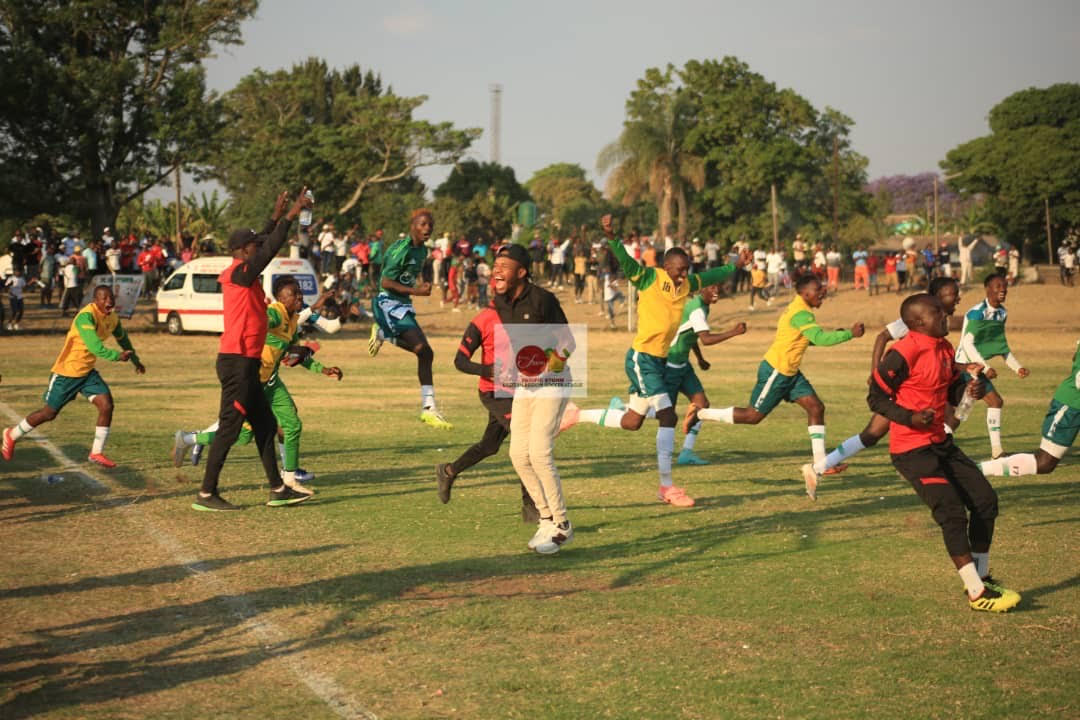
FC Hunters Crowned Champions in Historic Victory

FC Hunters Football Club etched their name into the history books on Sunday with a thrilling 2-1 win over Tenax Correctional Services FC at Rudhaka Stadium, clinching the Pacific Storm Eastern Region Soccer League championship with one match still to play.

Published

on

FC Hunters Football Club etched their name into the history books on Sunday with a thrilling 2-1 win over Tenax Correctional Services FC at Rudhaka Stadium, clinching the Pacific Storm Eastern Region Soccer League championship with one match still to play.

By Hector Chifamba

The showdown, a week 29 fixture between the league’s top two teams separated by just two points, was the decisive moment of the season. With Masvingo United FC held to a goalless draw at Mucheke Stadium, FC Hunters’ win sealed the title.

Rudhaka Stadium was packed with passionate fans whose cheers lifted every FC Hunters move and jeered every Tenax attempt. Among the crowd were league officials Patient Dube and Fungai Munyoro-Chingaira, witnessing the culmination of a season-long rivalry. Tenax Chairman Stefani Masina watched anxiously, hoping for a moment to silence the home crowd.

The match kicked off to a roaring crowd, with Tenax showing early promise. Takudzwa Murimba’s dazzling run and cross in the 20th minute found Clarence Mbauya, but his shot was calmly saved by debutant goalkeeper Danny Tagara.

FC Hunters responded with intensity, and in the 40th minute, Nicholas Nyamandu delivered a moment of magic. After a slick passing sequence, Denzel Murape sent in a cross that Nyamandu controlled with his chest and volleyed into the top corner, leaving Tenax keeper Sam Bumbate helpless.

Coach Clifford Dzvairo made a tactical switch, bringing on veteran striker Ngandu Mangala. The pressure mounted, and in the 70th minute, Mangala was fouled in the box by Shingayi Sithole. Referee Persuade Mandiki awarded a penalty, and league top scorer Godfrey Dabgwa coolly converted his 18th goal of the season.

Tenax refused to back down. Just two minutes later, they earned a penalty of their own when Clarence Mbauya was brought down. He stepped up and scored his 12th goal of the season, narrowing the gap to 2-1.

FC Hunters held firm until the final whistle, sparking jubilant celebrations. Confirmation came from Mucheke Stadium that Masvingo United had drawn, officially crowning FC Hunters as champions.

Coach Dzvairo praised his team’s discipline and determination:

“We stayed patient and focused. These players have shown mental strength all season.”

Tenax coach Blessing Madombi acknowledged the loss but commended his squad’s effort:

“It was a big game, and though we fell short, our boys fought hard.”

Dzvairo becomes the first coach since independence to lead a team from Marondera and Mashonaland East to the Premier Soccer League, breaking a record held since the 1960s by St Paul’s Musami FC.

“It feels surreal,” Dzvairo said. “This is proof that hard work and persistence pay off. Everyone at this club—players, staff, fans—wanted this title more than anything, and they earned it.”

Dzvairo also credited the league’s sponsor, Pacific Storm, for elevating the competition:

“Their involvement brought a new level of professionalism and excitement. Stadiums were full, and the quality of football was top-tier. This is how we grow the game and inspire future talent.”

Continue Reading
Click to comment

Leave a Reply

Your email address will not be published. Required fields are marked *

Football

Mahere urges Zimbos to support Warriors… As they face Mo Salah on Monday

Former Mount Pleasant Member of Parliament Fadzayi Mahere has called on Zimbabweans to rally behind the national football team, the Warriors, as they prepare for the Africa Cup of Nations in Morocco which will run from 21 December 2025 to 18 January 2026.

Published

on

Former Mount Pleasant Member of Parliament Fadzayi Mahere has called on Zimbabweans to rally behind the national football team, the Warriors, as they prepare for the Africa Cup of Nations in Morocco which will run from 21 December 2025 to 18 January 2026.

The Warriors will open their campaign against African giants Egypt on Monday, a side led by star forward Mohamed Salah, in the first match of the 35th edition of the biennial tournament.

Posting on her X account (formerly Twitter), Mahere said:

Continue Reading

Football

Betrayed. Silenced. Dropped.

Inside the Munetsi Exclusion That Rocked Zimbabwean Football

Published

on

Inside the Munetsi Exclusion That Rocked Zimbabwean Football

Marshall Munetsi will not wear the Warriors jersey at AFCON 2025.

Not because he’s injured. Not because he’s out of form. But because he spoke up.

How does a midfield general, fit, in form, and flying high in Europe, get axed from Zimbabwe’s AFCON 2025 squad without a word of reason?

ZIFA had no answers. Just a shrug. A vague nod to “fitness concerns.” But the truth, as uncovered by Bhorafrika, is far more sinister.

This wasn’t a footballing decision. It was a purge.

When the final Warriors squad for the 2025 Africa Cup of Nations was announced, the omission of Marshall Munetsi sent shockwaves through Zimbabwean football. Here was a player in his prime, a midfield general thriving in Europe, respected across the continent, left out without explanation.

But behind the scenes, a far more troubling story was unfolding. One that reveals a toxic cocktail of internal betrayal, administrative vendettas, and a governing body more interested in silencing dissent than building a winning team.

This is not just about a player. It’s about power. And what happens when those in charge feel threatened by those who lead from within.

According to Bhorafrika, it began, as many modern revolutions do, with a message.

In the days leading up to a crucial match against South Africa, the Warriors camp was in disarray. Promised allowances hadn’t been paid. Morale was crumbling. Players were frustrated. Angry. Tired of broken promises.

In a private team WhatsApp group, Munetsi, one of the most senior and respected voices, urged his teammates to consider a boycott. Not out of malice, but out of principle.

To many, it was leadership. To ZIFA, it was mutiny.

What happened next would alter the course of Munetsi’s international career.

Someone, a teammate, a Judas, took a screenshot of Munetsi’s message and sent it to ZIFA official Kudzai Chitima. From there, it spread like wildfire through the corridors of power.

The response was swift and brutal.

Munetsi was summoned. Threatened. Told he would never play for the national team again unless he apologized. Some officials even pushed to have him expelled from camp before the Bafana Bafana game, a move only narrowly avoided.

The damage, however, was done. Trust was broken. The relationship between Munetsi and the administration lay in ruins.

When the AFCON squad was finalized, ZIFA claimed Munetsi was injured. But his club, Wolves, quickly debunked that narrative. In official communication to ZIFA, they confirmed he was 95% fit and expected to be ready for the tournament.

All ZIFA had to do was assess him. They didn’t.

Other players with more serious injuries were called up, examined, and monitored. Munetsi? Ignored.

The message was clear: this wasn’t about fitness. It was about punishment.

If the administration had turned its back on Munetsi, so too had the coach.

Head coach Marian “Mario” Marinica reportedly sent Munetsi a scathing message, expressing disappointment over missed camps, lack of communication, and even his failure to congratulate the team after a win in Qatar.

Then came the final blow: a demand for a written letter pledging future commitment to the national team.

It was an unprecedented move. One that reeked of mistrust and humiliation. One that no other player was asked to endure.

Taken together, the leaked messages, the threats, the injury smokescreen, the coach’s coldness, the picture becomes painfully clear.

Munetsi wasn’t dropped. He was targeted.

ZIFA turned a player’s call for accountability into a disciplinary offense. They weaponized a private conversation. They spun a false injury narrative. And they painted a loyal servant of the game as a disruptive force.

It’s a pattern Zimbabwean fans have seen before. And it’s one that continues to haunt the national team.

Munetsi’s exclusion is not an isolated incident. It’s a symptom of a deeper rot within Zimbabwean football.

An environment where speaking up is punished. Where leadership is feared. Where politics trumps performance.

If a player of Munetsi’s caliber can be cast aside for demanding professionalism, what hope is there for the rest?

What message does this send to young players dreaming of donning the national jersey?

And what future does Zimbabwean football have when its best are treated as threats?

ZIFA has yet to offer a credible explanation.

But their silence speaks volumes.

Until accountability replaces ego, and leadership is embraced rather than feared, the Warriors will remain a team at war with itself.

And the nation will continue to pay the price.

Continue Reading

Football

Dembare at the Crossroads: A Supporter’s Call for Renewal

Published

on

By Wilfred Chipere

As a lifelong Dynamos supporter, celebrating the club’s survival from relegation feels both strange and unsettling. For decades, Dembare has represented excellence, pride, and dominance in Zimbabwean football. Survival battles have never been part of our history, let alone something to celebrate.

Yet the 2025 season dragged the Glamour Boys into unfamiliar and painful territory. The struggle on the field, the confusion off it, and the overall lack of direction left many supporters frustrated, disappointed, and deeply concerned about the future of our beloved institution.

Leadership Failures Behind a Difficult Season

Dynamos’ woes this year were not entirely a result of poor player performance. A closer look reveals deeper structural issues, particularly within the executive. The 2025 campaign exposed serious shortcomings in leadership, planning, and decision-making at the top.

The revolving door of coaches was one of the clearest indicators of instability. Dembare went through three different coaches in a single season, a situation that should never happen at a club of this magnitude. The constant changes disrupted rhythm, eroded confidence, and created unnecessary tension.

Ironically, when Kelvin Kaindu arrived, he revived the team using the same group of players. This alone suggests that the initial coaching appointments were ill-considered and costly mistakes by the executive.

A Historic Fan Boycott

In another unprecedented moment, Dynamos fans staged boycotts during the season. Though I personally did not join the stay-aways, I understood the anger and disappointment that drove many to protest. Dembare supporters are fiercely loyal, and if they resort to a boycott, it signals a serious breakdown in trust.

Kaindu Brings Back Hope

Kaindu’s arrival changed the energy around the club. His professionalism, tactical discipline, and calm leadership immediately lifted the team’s spirit and results. With limited resources and no new signings, he managed to give Dembare supporters a reason to hope again.

That transformation revealed one truth: the problem was never the players, but the environment they were working in.

A Call for Urgent Reform Ahead of the 2026 Season

If Dynamos is to reclaim its rightful place at the top of Zimbabwean football, urgent action must be taken before the 2026 season begins.

Reassess and Reshuffle the Executive

Fresh leadership is required,leaders with football knowledge, vision, and accountability. The current executive must reflect on its decisions and allow new, capable individuals to step in.

Secure Key Contracts

Players and the technical team need stability. The club must urgently finalize contracts to prevent talent from being lured away by competing teams.

Strengthen Sponsorship

Football success is built on financial stability. Dynamos needs strong, consistent sponsorship to ensure players and staff are well taken care of. Stable income directly influences performance on the pitch.

One individual who stands out is Vincent Chiwonza a professional whose experience and character could help steer Dembare towards a brighter future if given room to operate.

Long-Term Planning

Short-term contracts and hurried decisions must be replaced with long-term strategies that bring continuity and stability.

Invest in Junior Development

A strong junior system is essential. Dembare must groom young players who understand the club’s identity, culture, and expectations from a young age.

Conclusion

The 2025 season was a wake-up call for Dynamos. While supporters remain loyal and hopeful, the club must address its internal issues to avoid a repeat of this year’s disappointment. Dembare deserves better its history demands better.

As we look ahead, the 2026 season provides an opportunity for renewal, reflection, and rebuilding. With the right leadership, proper planning, and united supporters, the Glamour Boys can rise again.

Because no matter the storm, Dembare will always remain in our hearts.

Continue Reading

Trending