Connect with us

Football

Heartbreak for Zimbabwe as Comoros and Mozambique Advance to COSAFA U17 Semifinals

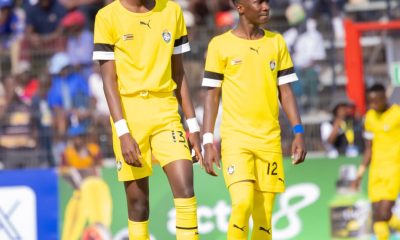
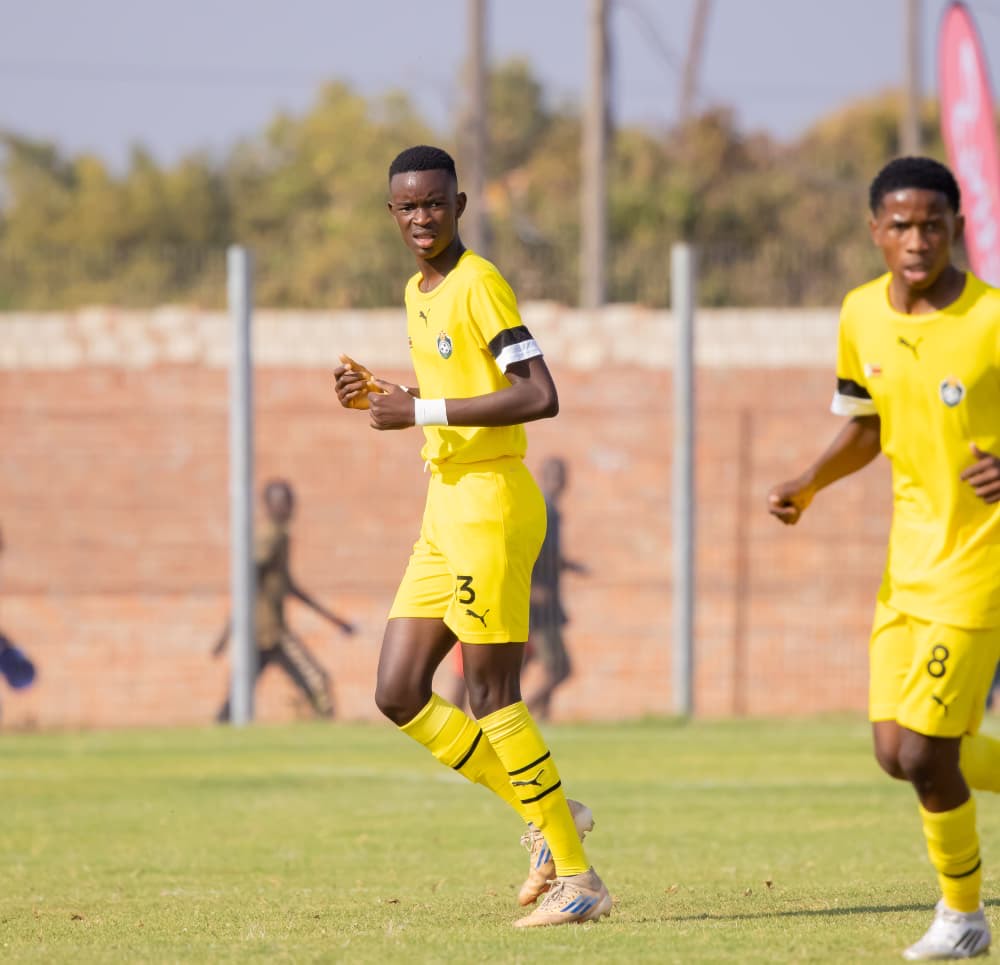
HARARE – Zimbabwe’s journey in the TotalEnergies CAF Under-17 Africa Cup of Nations 2026 | COSAFA Qualifiers came to a disappointing end on Monday, as Comoros and Mozambique sealed their places in the semifinals following the final round of Group A matches at Ngoni MWOS Stadium.

Published

on

HARARE – Zimbabwe’s journey in the TotalEnergies CAF Under-17 Africa Cup of Nations 2026 | COSAFA Qualifiers came to a disappointing end on Monday, as Comoros and Mozambique sealed their places in the semifinals following the final round of Group A matches at Ngoni MWOS Stadium.
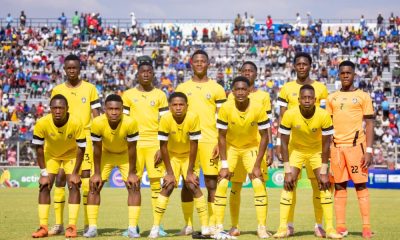
Mozambique delivered a commanding performance in the early fixture, dismantling Eswatini 4-0 to finish top of the group with seven points and a +5-goal difference. Later in the day, Comoros edged Zimbabwe 3-2 in a thrilling five-goal encounter, securing second place with seven points and a +4-goal difference—enough to guarantee their spot as the best runner-up across all three pools.

Backed by a passionate home crowd, Zimbabwe showed flashes of brilliance and attacking flair throughout the tournament. In their final match, they rallied from a goal down to lead 2-1, thanks to a stunning strike from substitute Tadiwa Chakuchichi and a Comoros own goal. But defensive lapses in the final quarter allowed Comoros to snatch victory with goals from Fasifdine Ahamada and Mathis Ali.

Despite their spirited performances and moments of individual brilliance, the Young Warriors finish the group stage with just one point from three matches, having drawn with Eswatini and lost narrowly to both Mozambique and Comoros.

TeamPointsGoal Difference
Mozambique7+5
Comoros7+4
Eswatini1-5
Zimbabwe1-4

Football

Dynamos: From Survival to Revival – A Tale of Grit, Glory, and Grit Again

Few stories in Zimbabwean football capture the drama, resilience, and unpredictability of the game quite like Dynamos Football Club’s journey from the brink of relegation in 2025 to becoming genuine title contenders in 2026. The Glamour Boys, long celebrated as the country’s most decorated side, have once again proven that in football, despair can quickly turn into triumph.

Published

on

Few stories in Zimbabwean football capture the drama, resilience, and unpredictability of the game quite like Dynamos Football Club’s journey from the brink of relegation in 2025 to becoming genuine title contenders in 2026. The Glamour Boys, long celebrated as the country’s most decorated side, have once again proven that in football, despair can quickly turn into triumph.

2025: A Season of Survival and Stunning Redemption

The 2025 campaign stands as one of the darkest chapters in Dynamos’ history. At one point, relegation felt not just possible, but inevitable. This was no longer a team chasing glory; it had become a club fighting for survival. The season exposed deep cracks both on and off the pitch—poor results, administrative dysfunction, and a glaring lack of direction dragged the Glamour Boys to the brink. For a club with one of the richest legacies in Zimbabwean football, the prospect of dropping into the lower division was once unthinkable, yet it had become a frighteningly real possibility.

Fans braced themselves for the unimaginable, watching their beloved team teeter on the edge of collapse. Then came Kelvin Kaindu, the former Highlanders coach, whose arrival brought a measure of stability at a time when hope was rapidly fading. What followed was not an immediate transformation, but a slow, stubborn resistance to collapse. Survival, when it came, felt less like an achievement and more like a narrow escape.

And yet, in one of football’s most striking contradictions, this same struggling side rose to conquer the Chibuku Super Cup. Against all odds, Dynamos not only survived but claimed the prestigious title, defeating Triangle United 1–0 at Gibbo Stadium. The decisive moment came from Enasio Perezo Jr, who struck after coming on as a second-half substitute, sealing victory and securing a historic third consecutive Chibuku crown, an achievement unmatched by any other team.

Enasio Perezo Jr scored Dynamos’ winner in their 1–0 Chibuku Super Cup final victory over Triangle United at Gibbo Stadium on 30 November 2025.

Three in a row. At a time when relegation seemed more likely than silverware.

This victory was more than silverware; it was a statement. A team written off as relegation fodder had transformed into cup kings, earning the right to represent Zimbabwe in the CAF Confederation Cup.

Off-Season Turmoil: Exodus and Uncertainty

But if the 2025 season ended on an improbable high, the off-season swiftly dragged Dynamos back into familiar turmoil. As the champagne dried, the cracks began to reappear. The club lost several key players in quick succession, most notably captain Emmanuel Jalai, who moved to Durban City in South Africa, along with goalkeeper Prince Tafiremutsa, midfielders Shadreck Nyahwa and Vusa Ngwenya, and the mercurial Denver Mukamba. In a matter of weeks, the core of the squad that had just delivered silverware was dismantled, leaving behind uncertainty and a team forced to rebuild almost from scratch.

Off the field, the chaos intensified. Player contract disputes, unpaid salaries, failure to secure sponsorship, and the recurring habit of losing players for free once again painted a picture of a club trapped in administrative dysfunction. As the 2026 season approached, there were genuine fears Dynamos might not even assemble a competitive squad.

Hope, if it existed at all, arrived quietly in the form of Genesis Mangombe. Ironically, he had just guided Triangle United, last season’s strugglers, to safety and a Chibuku final… only to lose that very final to Dynamos. Now tasked with rebuilding the Glamour Boys, Mangombe inherited not just a depleted squad, but a fractured institution.

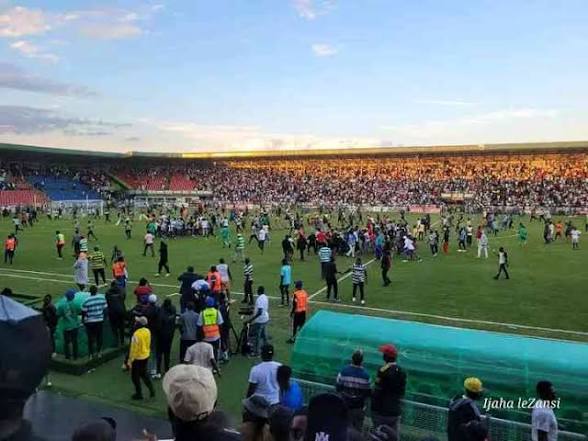
In the Castle Challenge Cup, a traditional curtain-raiser between league champions and cup winners, Dynamos under Mangombe suffered a humiliating 5–1 defeat to Scottland FC, one of the heaviest losses in the club’s history. For many, it merely confirmed what they had already come to believe: Dynamos were finished. Written off before a ball had even been kicked in the league, the crushing result only deepened the perception of a club in irreversible decline.

But football, as always, demanded patience. Or as the local saying goes: “Mirirai ra 3pm.” (Wait for the real game).

And when 3pm came, Dynamos answered.

2026: The Mamombe Effect and a Surprising Rebirth

His comeback was met with skepticism, but Mamombe has injected belief and tactical discipline into a squad many thought would crumble.

The results speak for themselves. Dynamos opened the season with a 2–1 away victory over TelOne FC in Gweru, setting the tone for what would follow. A hard-fought 2–2 draw against perennial rivals Highlanders came next, before a convincing 2–0 win over Bulawayo Chiefs on the road. Further victories against MWOS, last season’s title contenders, and Simba Bhora, the 2024 champions, suggested this was more than just a fleeting run of form.

After seven matches, Dynamos sit third on the table with 15 points from a possible 21—a 71% success rate, and are just one point behind league leaders CAPS United.

Pause and consider that.

This is the same team that was fighting relegation months ago. The same team that lost key players. The same team that was humiliated 5–1 in pre-season. The same team many believed would collapse under its own dysfunction.

So what changed?

Not everything. The off-field issues remain unresolved. Financial instability still looms. Structural inefficiencies persist. But on the pitch, something intangible has emerged—resilience. A refusal to be defined by chaos.

Dynamos today are not perfect. They are not even stable. But they are competitive. And in football, competitiveness is often the first step toward redemption.

This raises an uncomfortable question: how long can a club survive on resilience alone?

Because while results may temporarily mask deeper problems, history suggests that instability eventually catches up. Dynamos cannot continue to rely on miracles, last-minute recoveries, and emotional comebacks. At some point, structure must replace improvisation.

Yet for now, they remain one of the most compelling stories in Zimbabwean football—a club that refuses to die, no matter how many times it is buried.

From the brink of relegation to the edge of a title race, Dynamos have once again reminded everyone why they are called the Glamour Boys.

Not because they are flawless—but because, even in chaos, they find a way to matter.

Continue Reading

Football

Manchester City’s Surge Turns Up the Heat on Arsenal’s Title Dream

Manchester City’s emphatic 3–0 win over Chelsea at Stamford Bridge did not just close a gap on the table; it reshaped the psychology of the title race. For Arsenal, who had stumbled just hours earlier with a 2–1 home defeat to AFC Bournemouth, the timing could hardly have been worse.

Published

on

Manchester City’s emphatic 3–0 win over Chelsea at Stamford Bridge did not just close a gap on the table; it reshaped the psychology of the title race. For Arsenal, who had stumbled just hours earlier with a 2–1 home defeat to AFC Bournemouth, the timing could hardly have been worse.

Nico O’Reilly continued his scoring streak to break the deadlock in the 50th minute, Marc Guéhi slotted in his first league goal for the club then Jérémy Doku pounced on an awful error by Moisés Caicedo to complete Chelsea’s humiliation.

Nico O’Reilly scored first goal in City’s 3-0 win on Sunday

What had looked like a position of control now feels distinctly fragile. Arsenal remain top with 70 points, but Manchester City sit just six points behind on 64, with a game in hand and, perhaps more importantly, momentum firmly on their side. In a title race defined by fine margins, momentum is often the most decisive currency.

City’s victory over Chelsea was not merely efficient; it was authoritative. It carried the familiar tone of a team that knows exactly when to accelerate. Under Pep Guardiola, these late-season surges have become almost ritual. The message to their rivals is subtle but unmistakable: the champions are stirring.

Marc Guehi scored his first Premier League goal for Man City vs. Chelsea.

For Arsenal, the concern is not just the loss to Bournemouth, but what it represents. At this stage of the season, defeats are rarely isolated incidents; they invite doubt, scrutiny, and pressure. Mikel Arteta has spent years building a side capable of challenging City, but the final stretch of a title race is as much about resilience as it is about quality. The question now is whether Arsenal can absorb this setback without letting it define their run-in.

The arithmetic is simple: six games remain, and the margin for error has all but disappeared. Yet the narrative is more complex. Arsenal are no longer dictating the pace with authority; they are glancing over their shoulders. City, by contrast, are doing what they do best: closing in, applying pressure, and forcing mistakes.

All of this sets the stage for Sunday’s looming clash between the two sides, a fixture that now feels less like a match and more like a verdict. Should Arsenal win, they reassert control and push City to the brink. Should City prevail, the balance of power could tilt decisively, especially with that game in hand still to play.

This is what Manchester City’s result truly meant for Arsenal: it turned a manageable lead into a tense standoff. It transformed confidence into caution, and advantage into vulnerability. The title is still Arsenal’s to lose, but for the first time in weeks, it genuinely feels like they might.

Continue Reading

Football

Arsenal vs. Manchester City: The Psychological Battle That Could Define the Season

Arsenal’s Carabao Cup defeat to Manchester City was more than just a lost trophy — it was the opening salvo in what promises to be a season-defining psychological duel between two of England’s most formidable sides. With three competitions still in play, the question is not only whether Arsenal can win, but whether they can withstand the mental pressure City will continue to exert.

Published

on

Arsenal’s Carabao Cup defeat to Manchester City was more than just a lost trophy — it was the opening salvo in what promises to be a season-defining psychological duel between two of England’s most formidable sides. With three competitions still in play, the question is not only whether Arsenal can win, but whether they can withstand the mental pressure City will continue to exert.

City’s First Strike

At Wembley, Pep Guardiola’s men landed the first blow. Nico O’Reilly’s brace secured a 2-0 win, ending Arsenal’s quadruple dream and handing City their fifth League Cup under Guardiola. The victory was symbolic: City showed their experience in finals, while Arsenal faltered under pressure.

That shift in momentum revealed City’s ability to absorb pressure and then impose themselves — a hallmark of their psychological resilience.

As Guardiola admitted, “The first 15 minutes they suffocated us. We could not breathe. After that, we started to play.”

Arsenal’s Mental Test

For Arsenal, the defeat was a bitter pill. Mikel Arteta confessed,

“It’s a hard one to take… disappointing and leaves a bad taste.”

Yet former goalkeeper Jens Lehmann argued the loss could sharpen Arsenal’s edge:

“Arsenal is quite angry, and I think they really have to go now for the Premier League, for Champions League, and for the FA Cup.”

Anger, if harnessed correctly, can be a powerful motivator. But if it festers, it risks becoming self-destructive.

The decision to start Kepa Arrizabalaga over David Raya highlighted another psychological dimension: trust. Jamie Redknapp criticized the call as “a monumental error,” suggesting Arsenal may have undermined their own confidence before the match even began.

Momentum vs. Resolve

City now carry momentum. O’Reilly himself admitted:

“Unbelievable feeling to win a final and beat this team… Now we need to build on it. It will give us good momentum.”

Arsenal, meanwhile, must prove they can respond. They remain nine points clear in the Premier League, but City’s game in hand and their history of chasing down leaders will weigh heavily. The upcoming league clash could be the psychological tipping point — a win for Arsenal would reaffirm their authority, while another defeat could plant seeds of doubt.

The Bigger Picture

This rivalry is no longer just about tactics or talent; it’s about mental strength. Arsenal must show they can break City’s rhythm, as Lehmann suggested, and impose their own will in high-pressure moments. City, on the other hand, will look to exploit any cracks in Arsenal’s composure, knowing that psychological dominance often precedes silverware.

What’s Next?

The Carabao Cup final was “first blood” to City, but the war is far from over. Arsenal’s response in the Premier League, FA Cup, and Champions League will reveal whether Wembley was a turning point or merely a stumble. The psychological battle between these two sides could ultimately decide who lifts the biggest trophies come May.

Continue Reading

Trending